Expat life, Geneva, Geneva for beginners
Your child enters Geneva’s public school this year? Parentville’s got you covered!
The first thing to know: 1P aka 1st grade stands for the 1st grade in the primary school in Geneve.
Just remember: as everything in Switzerland depends on the canton, the school is even more detailed: everything depends on the teacher. Differences from what is described below may happen.
PREPARE
You’ll need: slippers, basanes, painting apron, a change of clothes. Also in some school: a box of tissues
You don’t need to buy any books, notebooks, crayons, glue, scissors etc. – such equipment is provided by the schools.
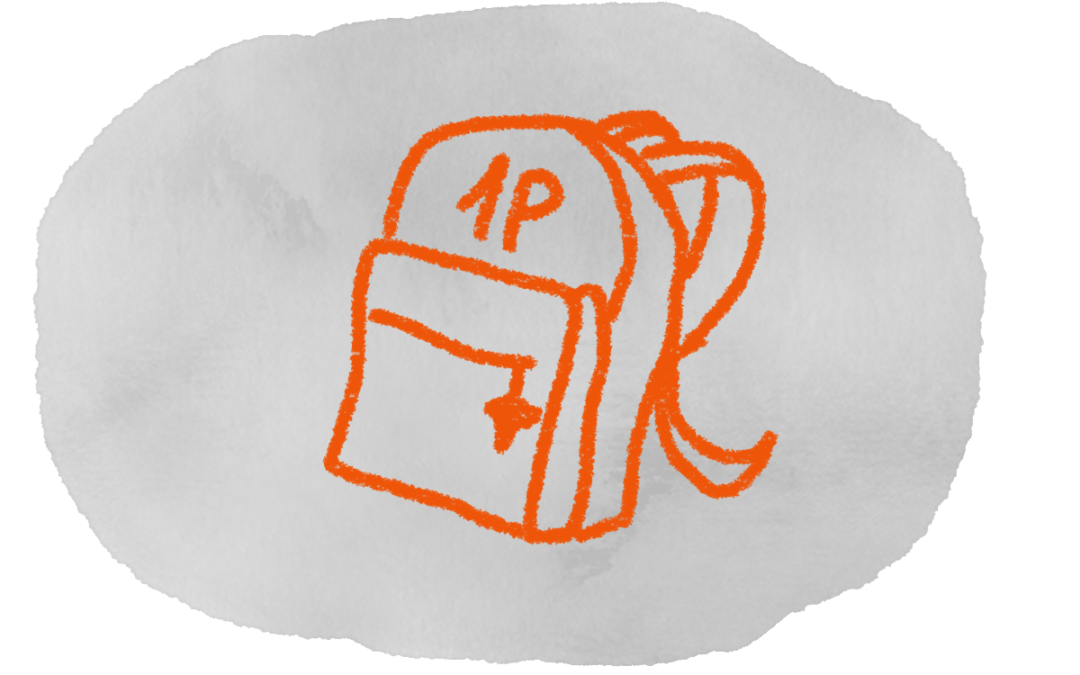
Does your child need a backpack?
Yes. But not a big backapack for heavy contents. Any light backpack that can easily hold an a4 folder will do!
Things that they will carry in the backpack are:
- a snack-box,
- a water bottle aka “la gourde”,
- and the a4 sized folder aka “la fourre”.
- a communication notebook (carnet de l’élève)
- All books, notebooks, crayons etc. stay at school.
You will get a teacher-parent communication book also called a students book (carnet de l’élève) with all necessary explanations, addresses, and phone numbers. Further pages constitute an agenda. Each day of the school year has its place, where teachers and parents can put important information. At the bottom of the page you’ll find space to request a meeting with the teacher (or teacher’s request to meet with you). You’ll need to sign the book every week. I promise, It will become clear once you get it in your hands.
In the first weeks of the school year you will also receive some forms to fill (mainly asking about address, phone numbers, special health issues, languages spoken etc). Nothing complicated.
INDEPENDENCE
Kids are expected to be diaper-free, and independent when it comes to all toilet-related issues. They should also know how to dress themselves, put on their shoes, etc. Of course, teachers will occasionally help if needed, but the expectation is for kids to be independent. For that reason it’s best to, for example, avoid shoes with laces until the child can tie them without adults’ help.
You may have heard that children in Switzerland are required to walk to school alone from the age of 4. It is not the case in the canton of Geneva. Some teachers may suggest it (but not to 4yo) but nobody will require it ever. You can walk your kid to school till they’re 18yo or more.
IT’S IN FRENCH
Don’t be afraid if your child doesn’t speak French.
Most probably, he/she won’t be the only one in the classroom. Teachers in Geneva are experienced and used to working with allophone children (allophone is french for not speaking French).
Grades 1-3P are very playful year, perfect to learn the language! Those joining later will be for half a day in their regular class, and half a day at a French-for-foreigners class.
If you do think your child will do better with some additional help, you can try a kids’ French course in one of the language schools, for example playful Spell Languages (offering both group and private lessons, as well as full weeks during school holidays).
PLAYTIME
1-2P focus on socializing, board games, songs, and as my daughter put it “that damn coloring”. Coloring is boring for many kids but the thought behind it is to master the pincer grasp, to better work with the pencil the following years. They get to learn their abc’s, count to 12, and write their name. But again, everything depends on the teacher. My daughter’s teacher added a bit of German to the mix.
1-2P classrooms are filled with toys, games, and colours. There’s usually a library corner, and a separate space for different kinds of pretend play scenarios.
It’s not really school yet. It’s a kindergarten in school’s building.
LEARNING 101
Don’t expect any reading or proper writing happening in Geneva 1P or even 2P classes. This won’t happen till the 3P. To many of you it might come as a shock, but actually according to a ton of research (example of an article summing it up: here), it is a great advantage of the Swiss system. The same is done in many Northern and Eastern European countries, especially those renown for their educational systems, eg Finland and Sweden.
(By the way, did you know there is a Swedish School in Geneva, offering an English-French language program based on Swedish methods)
They’ll do some math exercises in a form of mazes, solving easy logical tasks. They’ll have basics of geography – starting with their school setting, and maybe naming the streets around. But again, it all depends on the teacher.
They’ll also have science with experiments and learning about plants or animals. There will be a music class with singing. In other words they will be well occupied, and learn a whole bunch of things in a playful and engaging way.
THE DROP OFF: 8h00-8h45
Drop off is from 8:00 till 8:45. Provide your child with a small snack for the morning recess (la recrée): a sandwich, a fruit, dry fruits, a bit of cheese or whatever you want. You’re completely free to choose, unless the school decides otherwise (eg nosweets on certain days).
In some of the schools parents can walk in with their child only for the first 2 months of the school year (upon drop off, and to collect them). Other schools let parents in the full 1P and beyond. But in most, as of 2P you will be asked to stay outside, and your child will enter the school on their own.
THE LUNCH BREAK: 11h30-13h30/14h00
The lunch break is long. It lasts from 11:30, and finishes with an afternoon drop off from 13:30 till 14:00.
During lunch break, children from 1P eat their lunch, have a relax time (they lie down for 20-30 minutes, it is not a nap time). They can bring a cover, a pillow, and something to cuddle.
They can eat lunch at school with “parascolaire” (paid option) or be brought home to eat.
SCHOOL’S OUT
Schools out at 16h:00 every day. There is no school on Wednesdays for 1-4P. From 5P kids go to school on Wednesdays but only till 11:30 (there is no lunch or parascolaire option on Wednesdays).
After-school care, “parascolaire”, exists in all schools in canton Geneva. Children are taken care of from 16h till 18h. Parascolaire is managed in most municipalities by GIAP, not by schools. The activities during these two hours vary a lot from one municapility to another, and even between schools in the same municipality in the canton.
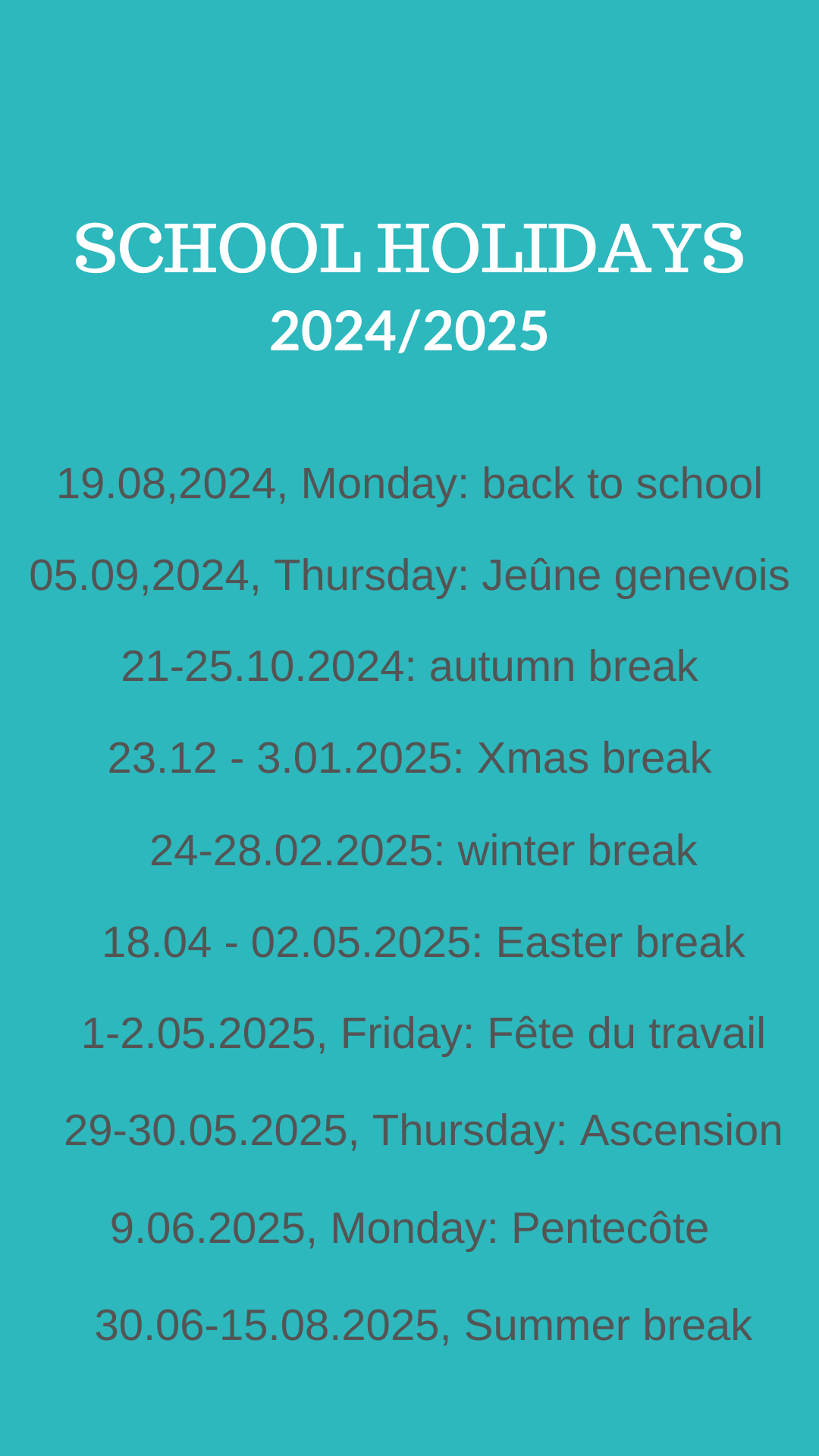
Holidays outside the set school breaks? You have to ask the school for approval and it is decided on case by case basis. If it’s less than 4 days of school leave, the teacher will decide, if it’s more the director of the school will make the decision. You should hand it in, ideally, at least 14 days in advance.
Exception: Jeûne genevois, that always happens in the beginning of the school year – you can hand in the request in the first few days of the school year to have a long weekend.
I wish you all a great first year of school in Geneva!

Expat life, Geneva, Mumpreneurs
What do you get when a French-Canadian opera singer lands in Geneva? (No, it’s not one of those jokes!) Quick answer: an expat-oriented, 100% online professional French language school. In other words: Prêt à Parler.
FYI: yes, your feeling is right – this is a sponsored article . But, as always, it is about a company/product I know, tested, and trust.
You know the story: you arrive as an expat in Geneva on a “short contract” only to realise 10 years later that you’re still here and still don’t really speak French well enough, especially when it comes to all those online forms, doing your taxes and even applying for a Swiss Passport. Add to that the stress of finding the time to get out of the house the same time each week to attend a French-language class, and of course getting through the notorious Geneva traffic, hunting for parking or navigating TPG. All while balancing the laundry, groceries, a job and a kid or kids at home.
This is where Prêt à Parler comes in. My husband, P, has been using it and it has been brilliant. He can go about his day, work, child-care – you name it – and once a week he simply logs in for one-hour of French lessons. On the other side of the screen is one of the ‘Super Profs’ as they call them, waiting to start a lesson that will feel more like a conversation than schoolwork, where grammar finds its way in without you even realising it.
But hey, didn’t you say there was an opera singer? What’s that got to do with teaching French?
Ah, oui! The opera singer in question is Isabelle Nicolas-Johnson, the founder of Prêt à Parler. Her opera background has helped her become an expert in articulation and pronunciation, as she attended many diction classes (French, English, Italian, and German) as part of her studies.
Over the years, she has developed special French pronunciation tips – and I don’t know about you, but this is where my husband and I struggle the most, especially with that French ‘r’.
About Prêt à Parler
Prêt à Parler brought digital education to Geneva way before COVID-19 forced everyone to move online. Isabelle launched her online programs back in 2017 when the word “corona” was only associated with a bottle of cold beer. (Don’t you miss those days?) Before she knew it, she was training a team of top bilingual teachers as well as her communication and IT support experts.
Prêt à Parler is a local expert in online French courses. It offers one-on-one classes, webinars, and preparatory courses for the FIDE exam (soon-to-be obligatory for those applying for a Swiss C permit, or a Swiss passport). They also developed their own learning platform called French for Everyday Life and share a ton of tips and mini-lessons on YouTube, Facebook and Instagram (handy for someone like me who spends a lot of time on those sites!), so you can give the idea of an online French class a try.

Benefit 1: Personalisation
Isabelle always knew that a one-size-fits-all approach would not work in education. We all have different styles of learning, interests, and reasons to learn a new language. Each course is personalised and adapted to your needs (meaning no two classes are the same!)
Need helping writing a formal letter? They will turn it into a class. Didn’t understand the programme you watched yesterday? They can turn it into a listening exercise. You basically get to turn REAL life into a useful learning exercise.
Benefit 2: The teachers
All Prêt à Parler teachers have been carefully selected for their professional, technological and personal skills. Plus, they know everything there is to know about that (in)famous FIDE exam.
After a trial lesson (super helpful), my husband was certain he had finally found a program matching his needs. He scheduled his lessons at 9 pm. Yes, you read that right, 9 in the evening. What!? How!? Well, it turns out his teacher, Sandra, is a native French-speaker who currently lives in New Zealand. 9 pm here – 9 am there. That is the beauty of online training programs – both the teacher and the student can be anywhere in the world.
Benefit 3: Comfort and flexibility
We are all different, with different lives, and different chaos (aka work-life balance), yet many language schools are set up as such so that you have to adapt to their schedule. Prêt à Parler offers a flexible solution (side note, it’s also great for introverts like me who don’t love the idea of group classes with strangers each week!)
My husband’s lessons each last 1 hour. Not 1 hour plus 40 minutes commute each way. Not 1 hour plus anything. There is no stress about traffic jams, the bus being late, or finding a parking spot. Not only does he have his lessons tailored to his specific needs, but improving his French doesn’t interfere with his work-life or his family life.
When it comes to scheduling your lessons, it can be late at night, early in the morning, or even on a Sunday. Your private classes can be rescheduled if needed within 24h. It means that no last-minute business trip, your child getting sick or vacation will be an obstacle in boosting your French! That is, as long as you have an Internet connection, of course.
And this is all possible thanks to an opera singer from Quebec who moved to Geneva. After all, who better to understand and cater to expats than a fellow expat?
* This article is a result of a paid collaboration between Parentville and Prêt à Parler.
Expat life
Do you know what your children sing in French? The tune is very joyful, the words sound sweet, but what are some of these songs really about? Read more about 5 creepy French songs for kids and find out.
Most of them are absolutely sweet and adorable. But there are some hidden gems in the French rhymes, that don’t bother to hide the cruelty of the world from the kids.
Ready for 5 creepy French songs for kids? Let’s go from the least creepy down to the most terrifying one, so you can stop reading the moment you feel uncomfortable.
-
- Une Souris Verte (lyrics to be found here). Ever thought of dipping a (green!) mouse in hot oil to transform it into a snail? Well, your child might 😉 Luckily, a chance for finding a green mouse is very limited.
-
- Marlbrough S’En Va-T’En Guerre (lyrics here). An absolutely adorable song in terms of the melody, with a rhythm perfect for a long walk. But it’s a out a man who goes on a war, dies, is buried, and his wife must sleep all alone. Amazing how this sad text is sung to such tuneful sounds!
-
- Allouette (for the lyrics click here). One of the most popular nursery rhymes about a little bird. If you don’t speak French, you probably thing it’s the cutest song ever. Nope. It’s about plucking feathers from each part of the poor skylark’s body. Have fun!
-
- Ne Pleur Pas Jeanette (lyrics: here). If you’re a happy-end loving kind of person, it’s not a song for you. The song tells a story about Jeanette who’d rather choose death by hanging with her friend, than to mary a guy the family chose for her. They hung them on the highest branch, la la la la.
-
- La Légende de Saint Nicolas (lyrics for courageous here). Oh la la. That is the most terrifying story ever. Kids get lost in a forest, a butcher offers them shelter, kills them, cuts them and puts them in the salting-tubs. Sigh. There is a sort-of-happy-ending to the story luckily.
The French have been singing these songs for generations. I hope you’ll agree there is no sign of these songs turning the French speakers into creepy adults. Thus, you don’t have to fear your child’s future. Better learn French and sing along with them!
Now, you can learn French with Parentville thanks to Frantastique – a super duper funny French teaching app, that will take just 10 minutes of your day. You can sign up for the first 30 days for free with no obligation to go further, you will not be asked for your credit card details. Intrigued? Read more about it and sign up here.
The point of this article is to shed some light, laugh a bit, and give you an insight into this so often forgot part of the culture children grow up in. Before you get scared, before the criticism starts itching your tongue, think hard about your own culture and the songs you sung. Here are some good example for native English speakers: It’s Raining, It’s Pouring, London Bridge, and more here.

Expat life, Geneva
10 reasons Switzerland is (not) the best place to raise kids
Forget the beautiful lakes, breath taking mountains, multilingualism, international atmosphere in the cities, calm and safety. These are the real reasons you should pack your suitcase, grab your kid and join us, happily raising our kids on the greenest of the grasses of the world. (more…)
Expat life
[bws_featured_post]I’m a monolingual parent of a multilingual child.
This is a post without tips and solutions. It is for me to check if I’m alone and nuts with my fears and at the same time, to let others know they’re not alone with their fears and nuttiness. (more…)
Expat life
Once, there was a girl praised for her writing skills, praised for her rich vocabulary in primary school. She later went through phases of being better and worse using her native language, but surely she was not bad at all.
And then she moved abroad.
(more…)
Expat life
Are you laughing already? Are there any advantages of bringing up kids away from home, away from our families? As emigrants/expats we tend to complain how hard our lives are, so let’s cheer up for a moment and find some advantages of expat parenting!
(more…)